Choosing the Right Throw Bag for Rafting or Kayaking
A throw bag is one of the most important pieces of safety gear you can carry on the river. Whether you're kayaking or rafting, it's often the fastest way to reach a swimmer in trouble or raft stuck on a rock (aka boat pin or wrap).
There's no single best throw bag for everyone. Your choice depends on the kind of boating you do, your ability to throw, the type of boats you're using, the intended uses, and the river you're on. The rope needs to:
- Float
- Be visible
- Pack cleanly
- Deploy smoothly
Most paddlers won't be using it for complex rope systems or boat recoveries, but it's still essential for swimmer rescues, lining boats around obstacles, pulling on stuck boats, or even basic camp tasks like hanging tarps or drying gear.
What to Look For
Rope Material and Strength Most people do fine with standard floating polypropylene rope rated around 3-6 kN. That's strong enough for pulling in swimmers, getting an initial line to a stuck raft, and for most other uses. If you want something tougher for heavier loads or mechanical advantage systems, look for ropes with a Spectra or Dyneema core. Those are stronger, a bit more expensive, and can have a stiff feel that makes them harder to work with.

Modern Carrot Style Throw Bags and One Uninspired Bag of Rope
Rope Diameter It's harder to get a good grip on smaller diameter ropes for both the person on shore and the swimmer grabbing the rope.
- 1/4" (6.3 mm:) Light and compact, good for paddlers that struggle throwing
- 5/16" (8 mm): Fairly easy to throw accurately and thick enough for a swimmer to hold onto (best overall choice)
- 3/8" (9.5 mm): Great grip and stronger but heavier and harder to throw accurately and long distances
Length Longer ropes aren't always better. The best length is the longest one you can actually throw accurately.
- 50-60' (15-18 meters): Works great for most people as this is the limit of most people's ability to throw accurately
- 65-75' (20-23 meters): Makes sense if you may be using it for pulling on rafts with or without mechanical advantage
Bag Style Historically we used floppy, uninspired bags of rope with a buckle over the top. The newer modern carrot style throw bags are easier to throw and easier to repack the rope. Look for brightly colored bags and minimal straps that can get tangled.
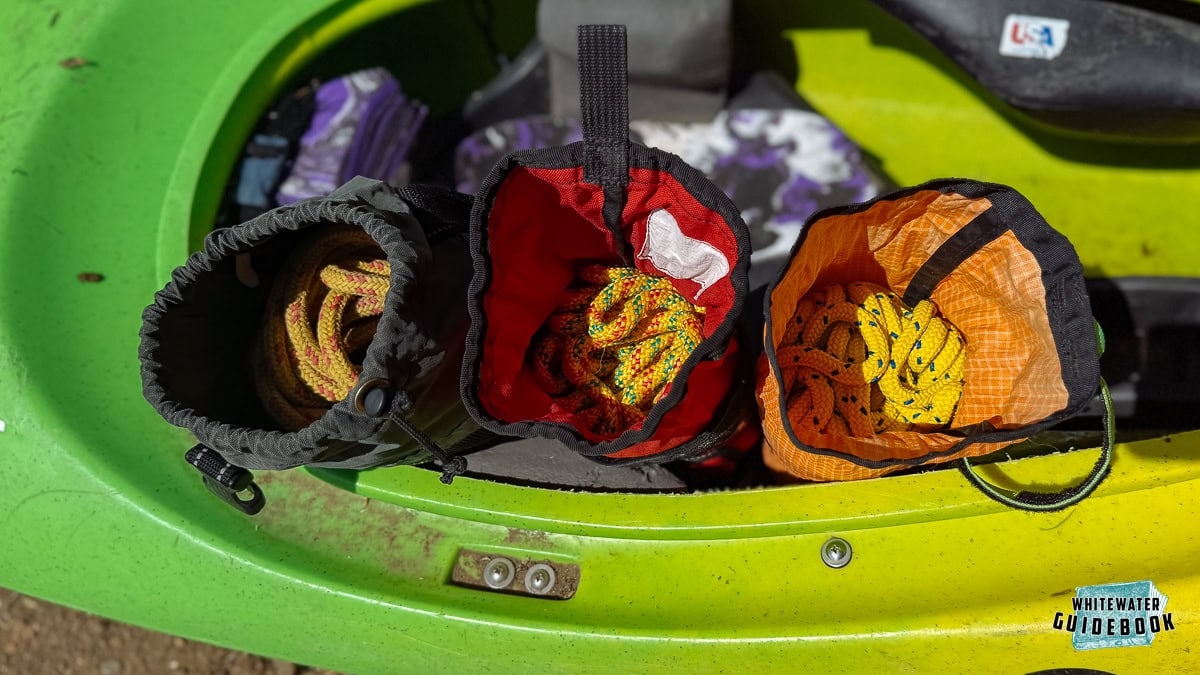
A Wide Mouth Makes it Easier to Throw and Restuff You Throw Bag
Waist Belt Throw Bags These are great so that you always have your throw bag with you although they can be annoying to wear. Consider a shorter rope in your waist belt throw bag and consider carrying a longer rope in your raft for other tasks. Make sure you get one where the throw bag is separate from the waist belt as it's not easy to throw them both together.
Quick Recommendations
For Kayakers: Go with something lighter in the 50-70' range. A throw bag that is compact and easy to throw is more important than maximizing strength.
For Rafters: Get a modern throw bag with an 5/16" rope in the 50-60' range gives you better grip and is fairly easy to throw. If you are going to potentially use it for mechanical advantage consider a 3/8" rope with a Spectra or Dyneema core in the 65-75' range.
For Beginners: Start with a 1/4" or 5/16" rope in the 50-60' range that is easier to throw while you develop your throwing skills.
Final Advice
Your throw bag is only as good as your ability to throw it. Take a good whitewater rescue course to develop the right technique and practice often. I try and throw my bag after every day on the river for practice and to dry the rope.
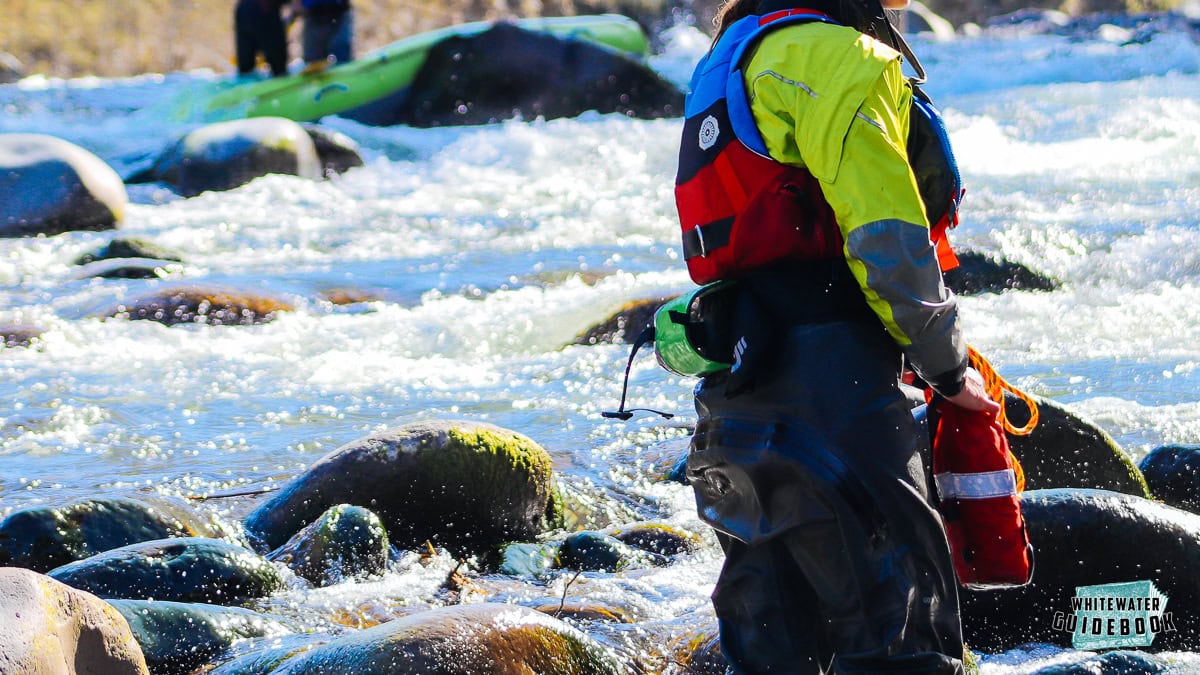
Throw Bag Practice in a Whitewater Rescue Course
At the end of the day, be honest with yourself about what you can actually throw well. A 70 foot rope you can only heave 35 feet isn't doing you any favors.