The Battle for Chainsaw Bans in American Wilderness (AI Generated)

Note: This is an AI generated podcast and intended for entertainment purposes. Please do your own research instead of trusting AI for facts.
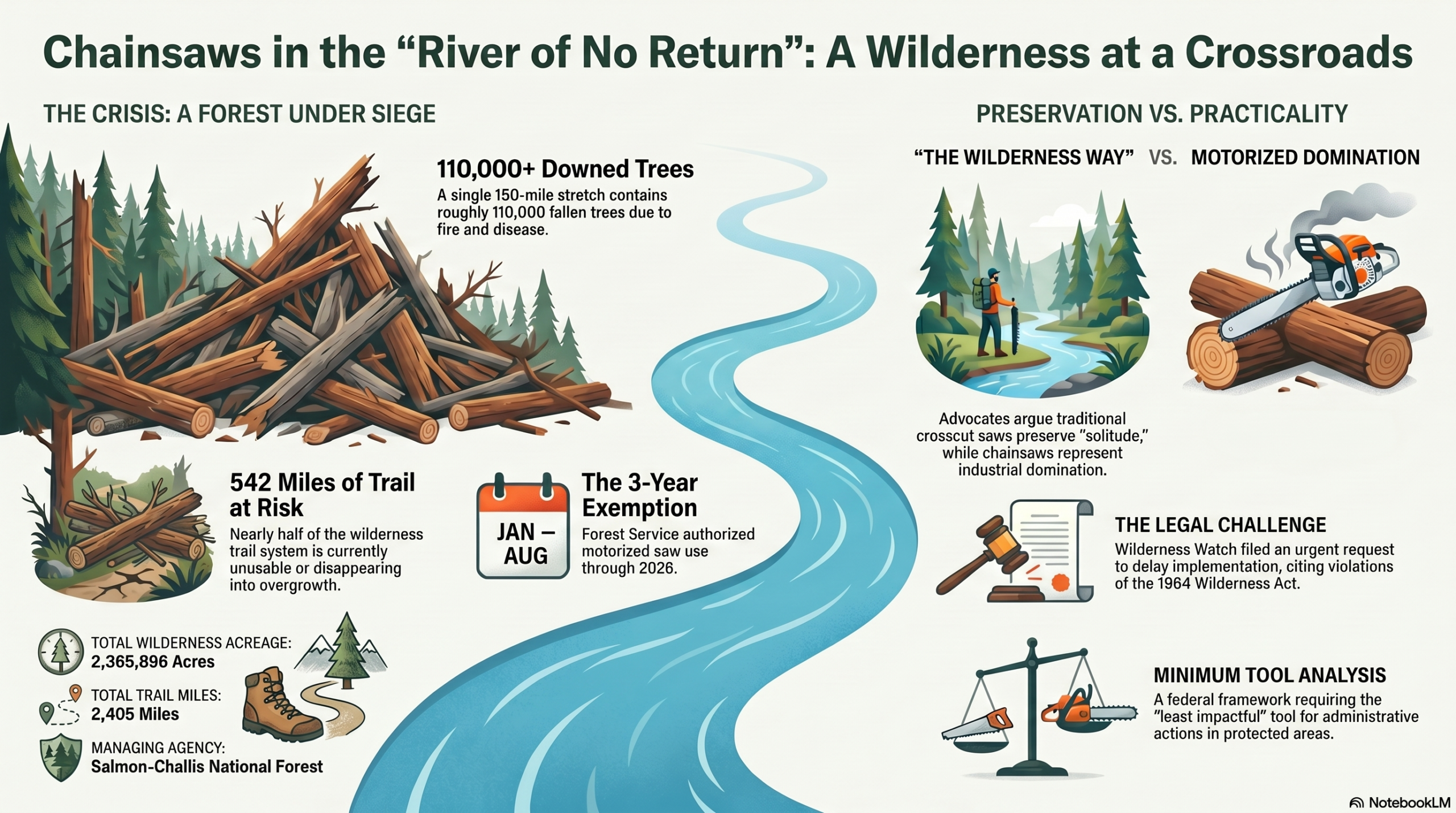
In May 2026, the U.S. Forest Service issued a precedent-setting decision to allow commercial outfitters to use gas-powered chainsaws to clear approximately 542 miles of trails within the Frank Church-River of No Return Wilderness. The agency cited extraordinary levels of deadfall, estimated at up to 110,000 downed trees in a single 150-mile stretch, which has rendered nearly half of the managed trail network impassable. This episode dives into the resulting firestorm, exploring why this decision is being hailed as a common-sense solution by some and denounced as a blatantly illegal betrayal of the Wilderness Act by others.
Key Topics Covered
The episode examines the biophysical crisis caused by decades of wildfire, insect infestation, and disease, which created a bottleneck of fallen timber that traditional hand-tool crews can no longer manage. We explore the legal tug-of-war between the Wilderness Act of 1964, which bans motorized equipment to preserve solitude, and the Central Idaho Wilderness Act of 1980, which mandates trail clearing to the maximum extent practicable.
The conversation highlights the clash between the Idaho Outfitters and Guides Association, who argue that blocked trails threaten the survival of rural businesses, and conservationists like Wilderness Watch, who fear a slippery slope toward national mechanization. Finally, we look at the wilderness way through personal stories from the field, featuring trail crew members who find spiritual value in the song of the traditional crosscut saw and fear the loss of primitive skills.
Discussion Question for Listeners
If a wilderness area becomes physically inaccessible to humans due to natural processes like wildfire and deadfall, has it fulfilled its purpose as a wild place, or has the agency failed in its duty to the public?