Pro Tips: PatchMaker 2.0
Repairing outdoor gear is more than just a practical skill, many wear their heavily worn and repaired gear as a badge of honor. Whether you’re fixing a torn pack or a well-worn jacket, repaired gear serves function as well as adds a bit of personality to your gear. The PatchMaker 2.0 kit is a great addition to your repair kit.
Ways to Patch Outdoor Gear
Outdoor gear can take a beating. There are several popular repair methods mostly having to do with what material you are patching or repairing.
- Iron-On and Adhesive Patches
Iron-on patches or heat-activated adhesives stick to fabrics without sewing. They’re fast and useful for quick fixes, especially on canvas or denim. However, they may not hold up well under extreme conditions or frequent washing. - Mending Tools and Looms
Devices like darning looms help you weave thread across holes, restoring structural integrity. This is where tools like the PatchMaker 2.0 come into play — providing a handheld loom for visible repairing and decorative patches. - Sewn-On Fabric Patches
The classic method: cut a piece of durable fabric and sew it over the tear by hand or machine. Great for durability and custom shaping, but requires sewing skill and time. - Visible Mending Techniques
These include embroidery, darning, weaving, and decorative stitching. Techniques like weaving or embroidery over holes are especially popular among creative menders and are highlighted in visible-mending traditions worldwide. - Specialized Outdoor Repair Tape
Products like Tenacious Tape or NoSoPatch are designed for technical fabrics like nylon or ripstop.

All you need for a great patch
PatchMaker 2.0
The PatchMaker 2.0 is a hands-on tool for mending holes, tears, and weak spots in fabric by weaving threads into a patch. It’s designed to be beginner-friendly, turning what looks like a complex task into a pretty simple (once you get the hang of it) way to repair some soft gear.
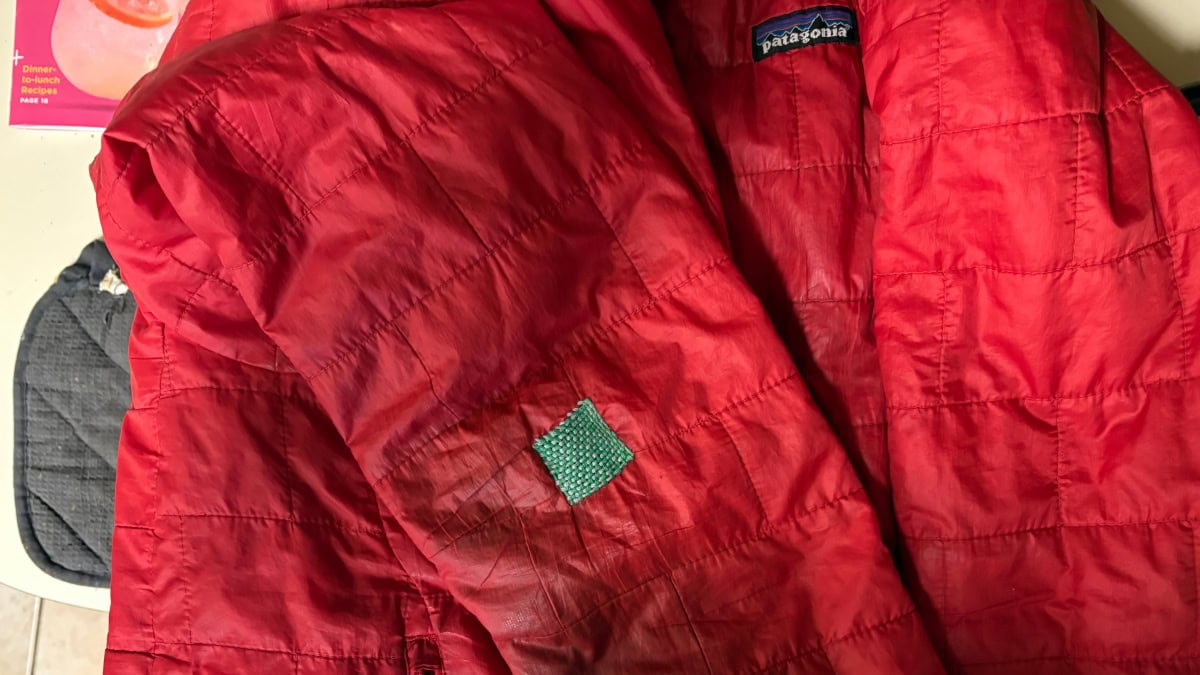
Puffy jacket patch
Paper instructions come with your PatchMaker but might be a little confusing or overwhelming to figure out. You also get access to online videos and a few guides for different patterns which make things a bit less daunting to get started.
Pros
- Great for Beginners
Designed for those new to visible mending with minimal prior sewing experience. Watch the videos a few times as you go. - Customizable Patche
You can create decorative or functional patches with the endless color thread options. - Extends Fabric Life
Giving worn items a second life supports sustainability and reduces waste. Also gives your gear that warn, "expert in the outdoors" look that some crave.

Cons
- Limited to Certain Fabrics
Designed for those new to visible mending with minimal prior sewing experience. Watch the videos a few times as you go. - Customizable Patche
Works best on knit and woven fabrics, think soft goods, layers, shirts, hats, scarves. Heavy outdoor materials like nylon or cordura are a bit harder to get needles through. - Time-Intensive
Compared to quick iron-ons or repair tapes, weaving takes patience and effort. However not all iron-on and tape type patches work on soft fabrics.
Final Thoughts
While the concept is pretty straight forward, it is a bit tricky and takes a little time and concentration. I found that practicing on plaid or other gridded fabric was nice to help keep things square and provide some guide lines. The puffy jacket was a bit tricky but it was only like 3rd try and I feel it came out pretty good. Take your time and watch the "how to" videos a few times.

Tripple patch!
Whether you’re repairing a beloved fleece top, or covering up a hole in your favorite river shirt, tools like the KnitPatch PatchMaker 2.0 Kit offer a fun way to blend utility with craft. With a little practice, patience, and time you will be able to repair that holey shirt from 15 years ago that you love.